We Just Need Another Perspective:
What I learned from the Art of Writing Class held at the Museum of Art - Deland.

The assignment was simple: find a painting you like and write about it. I loved the concept. Usually, when I write, my imagination drives the story. This time, I would have to stand still in front of someone else’s imagination and let it drive mine.
But I was running late, and I hate being late.
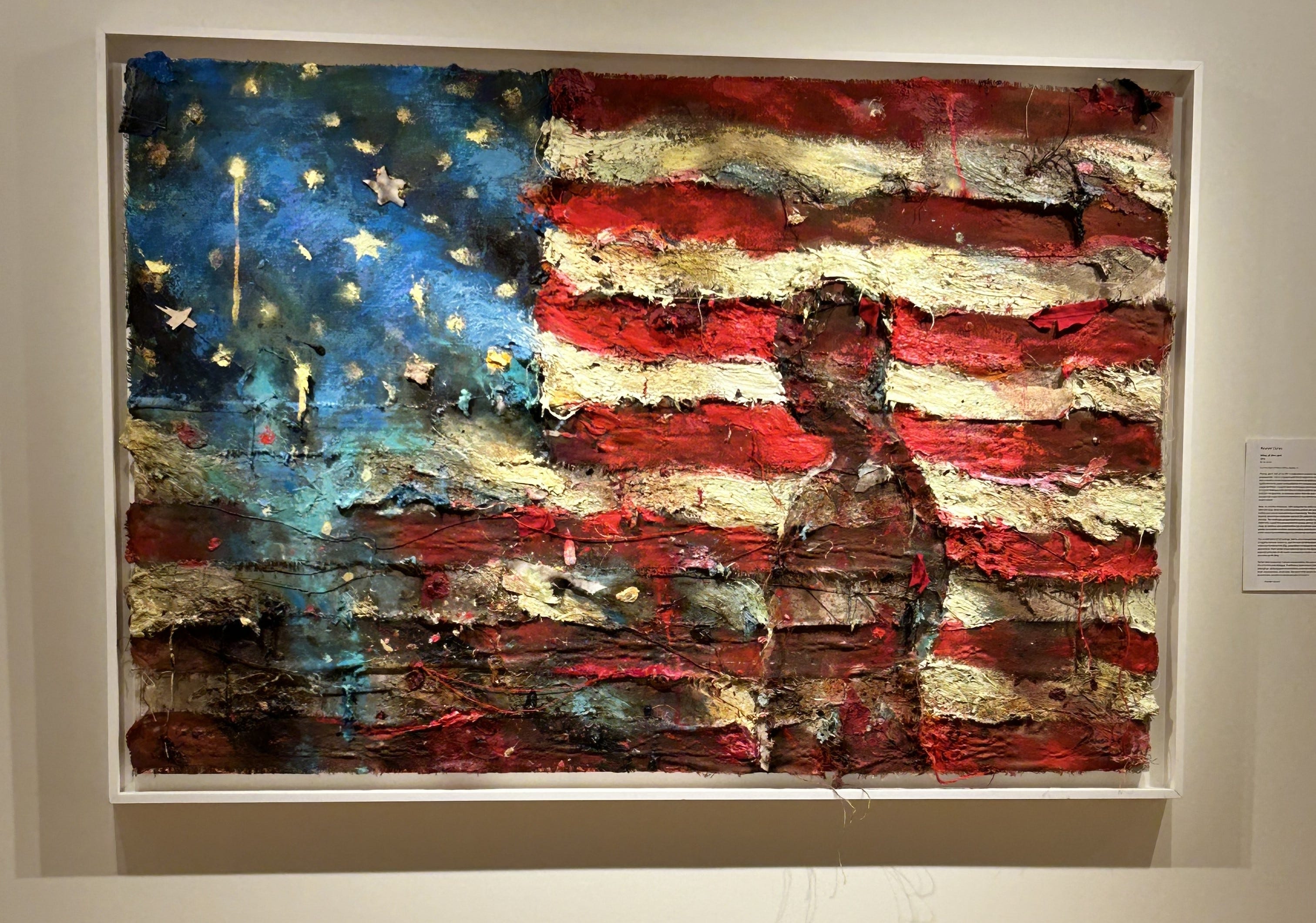
I hurried past THE piece, Veins of the Land by Reynier Llanes, and wanted to stop immediately. A sole figure, alone, head down. Was it reflection? Was it sadness? Why had the artist chosen to paint him looking down? I didn’t stop. I was running late, and I hate being late.
The minute the teacher let us explore, I moved fast. We had fifteen minutes to choose our piece. Instinctively, I knew I wouldn’t find anything as captivating, but I wanted to be sure. One cursory loop through the museum, and I was back in front of Veins of the Land.
The bio said Llanes was from Cuba. I should have known. Caribbean people have a way of finding each other, a subliminal message passed down through generations of shared tragedy and triumph. The piece suddenly took on new meaning.
From a distance, the painting was pure Americana. Oil, collage, fabric, and paint layered into clean white lines against a red backdrop, stars floating above a blue pool. The home of the free, the home of the brave, the proud and the patriotic. It portrayed everything I admired about America before I came to live here.
I should add that the date was July 5, one day after the most disappointing Fourth of July in my thirty years in America. I had been looking forward to 250. I wanted a national celebration of a country that had gone through so much to reach this point. I wanted it American big. Instead, there were competing celebrations in different cities, each with its own interpretation of what 250 meant, and it all fell flat for me. Maybe that’s why this painting hit home. Maybe that’s why the lone figure captured my attention and wouldn’t let go.
I moved closer, and the painting came into focus. The thick canvas fabric was torn and shredded, haphazardly plastered onto the canvas to create a rugged surface. The stars were misshapen. The blue ran down, smudging the white and red lines. It wasn’t clean, and it wasn’t perfect.
And the figure, still looking down. Why does anyone leave the only home they’ve ever known and come to America?
For me, it was love. I met a man, and I loved him. And if I’m brutally honest with myself, I also wanted the challenge. Jamaica couldn’t provide the opportunities I wanted for myself, and my husband wouldn’t have survived in close proximity to my family. He was barely surviving the distance I had already put between them and us. My family was controlling and claustrophobic, and there were a lot of us on a small island. America, by comparison, was as vast as the Caribbean Sea. Here, I could live on my own terms and carve out my own space to grow.
I looked at the figure again, head bent as if his neck no longer had the strength to hold it up. I understand that particular stance. I know the weight of a family’s expectations, the systematic way they break you down. The rules and regulations they impose, but can’t seem to live up to themselves. The structures of control: money, legacy, don’t do anything to shame the name, never noticing that they shamed it every day. To me, America was freedom. It was aspirational; it held boundless opportunities. Didn’t the figure understand that? I know the symbols of power and authority, and I know the yoke they require you to labor under. Was that what he felt?
I stared at him. I stepped closer still, and then I saw it. The figure was coated in brown paint. Growing up in Jamaica, my first instinct was that the brown didn’t represent skin color; as much as colonialism tried to divide us by color, it was far more successful in dividing us by class. But in America, I can understand the artist’s use of the color brown if he meant to represent skin color. But to me, the brown was soil. The land the artist had left, and the land he had come to. He brought it with him. The raw emotion of struggling to find a footing in a new place, of starting over, of carving out room for yourself in a vast country of diversity that so often seems cloaked in caste. We all carry the soil of where we were to where we are going, our history, our traditions, our beliefs. That’s the diversity that makes America great, isn’t it?
I took a picture of the artwork and turned it upside down. Someone once told me to try that, to see if it changed my perspective.
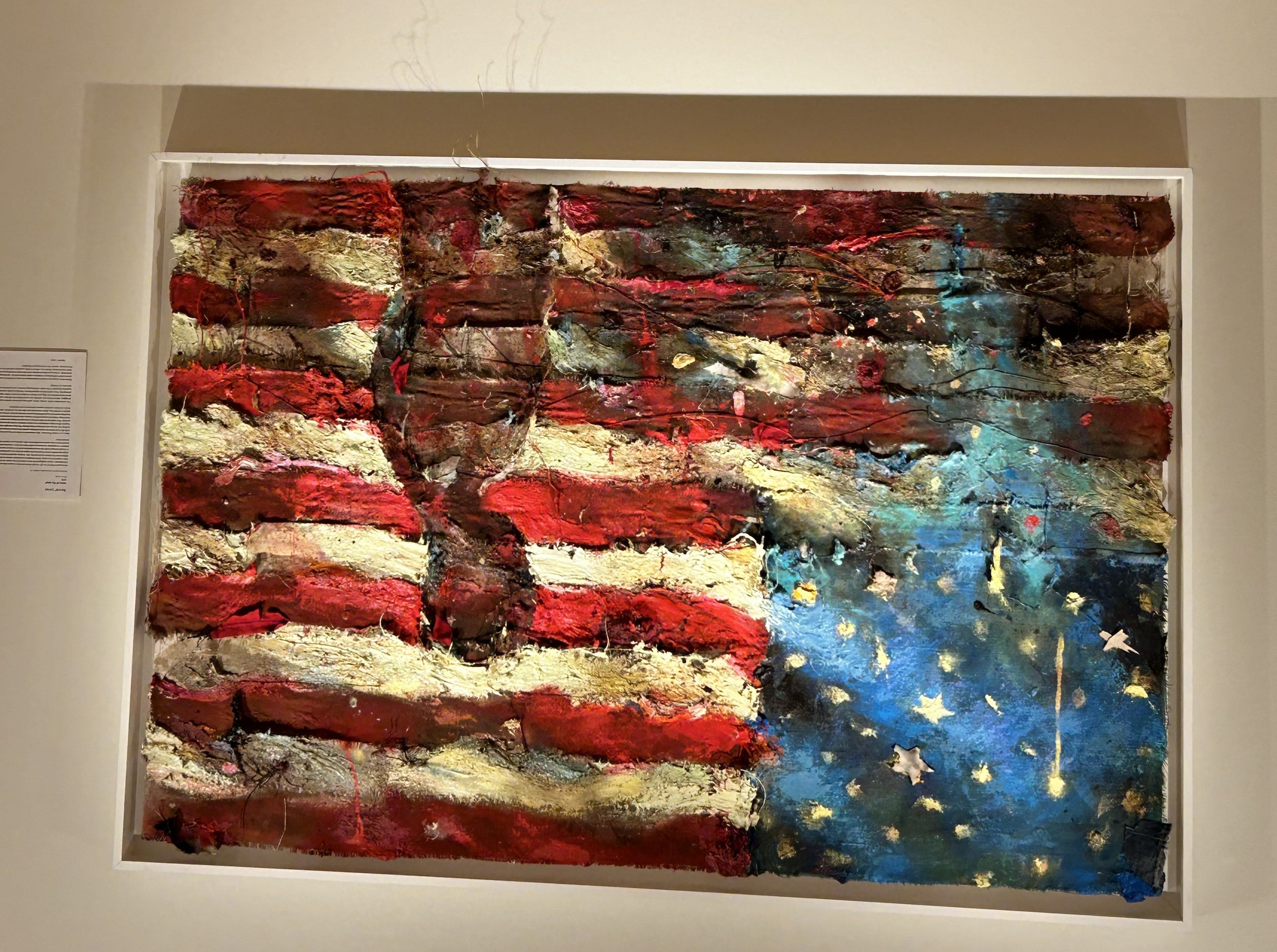
It did.
Upside down, the figure was no longer standing in the red, white, and blue; he seemed to be gazing intently into the blue pool that now held those precious stars. The blue I thought was pouring out, messing up the red and white, was now flowing into the red and white. The stars were still different in shape and size, but they were unmistakably stars.
That’s when I understood what the painting had been telling me all along.
America, the beautiful, has had her challenges, and she has her detractors. But she also has the devotion of those who have loved her and helped to shape her. She is, and will always be, the country of aspiration, innovation, and endless creativity, because her symbols are not promotion or indoctrination. They are not propaganda. They are authentic: ragged, smudged, imperfect, stitched together from torn fabric. They carry the raw, ragged truth of a painful yet powerful history where rules were rewritten when they no longer served the people, and seams were mended by brave men and women who remained boundless and hopeful.
That is exactly why these symbols belong to all who are lucky enough to call America home, because we understand that history cannot be erased simply because it is uncomfortable. History cannot be unstitched. It is there to show us what must change to create a better and more perfect union. And America has never been afraid of that change when an enlightened populace demanded it. That is her greatest strength: she refuses to stagnate in the comfortable, in the status quo.
Messy is beautiful. Diversity is strength when it becomes a source of unity. And one painting can save the Fourth of July for an immigrant who had hoped for more.
What’s your perspective on the painting? Leave a comment and let me know.
The Art of Writing takes place on the first Sunday of the month at the Museum of Art-Deland from 1:30-4:00 pm, and you can meet Reynier Llanes on August 7th from 6-7 pm at his Artist Talk.
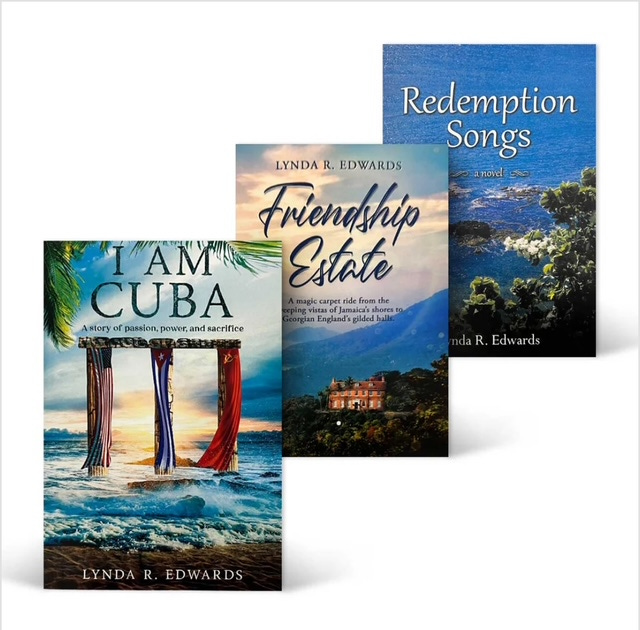
📚 Redemption Songs 📚 Friendship Estate 📚 I Am Cuba 📚 Yo Soy Cuba
You can find the links at www.lyndaredwards.com.